Protein Design
Alongside experimental structural biology, we use structure-based generative models to design de novo protein binders against membrane-protein targets (GPCRs and solute carriers), aimed at defined epitopes to serve as crystallisation/cryo-EM fiducials, purification reagents, conformational stabilisers, or starting points for functional modulators. The folds span natural antibody-like scaffolds (Ig/VHH) and genuinely novel de novo topologies with no natural structural homolog (novelty is scored per design).
Designs are generated and scored with the Boltzlab BoltzMol / BoltzProt API (boltz.bio/boltzmol-boltzprot-api).
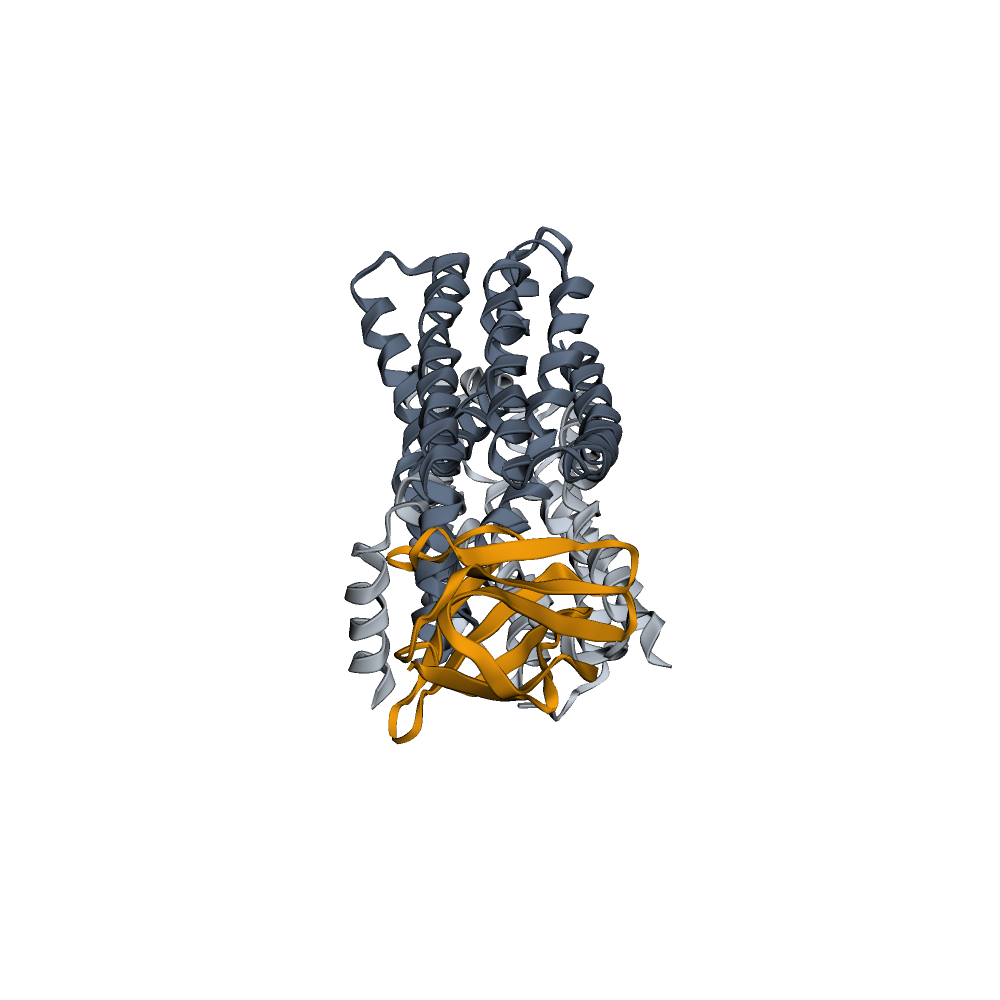
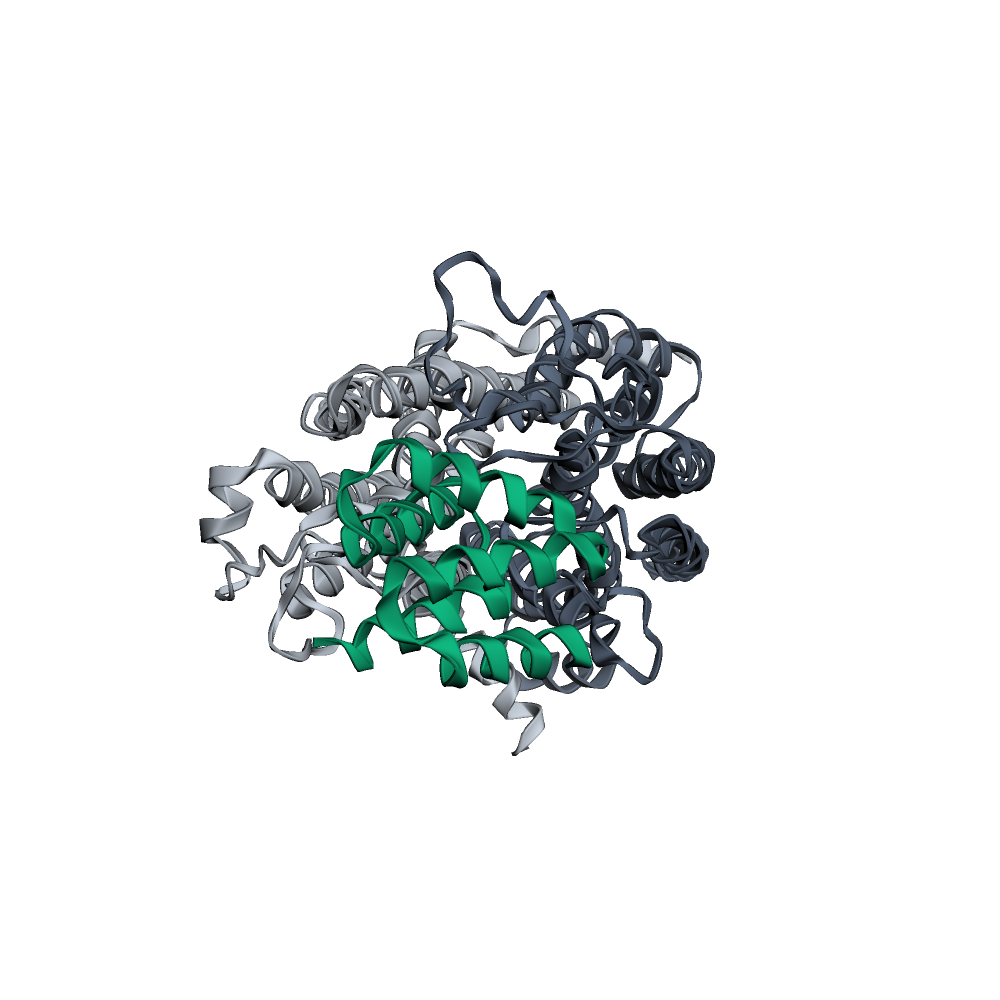
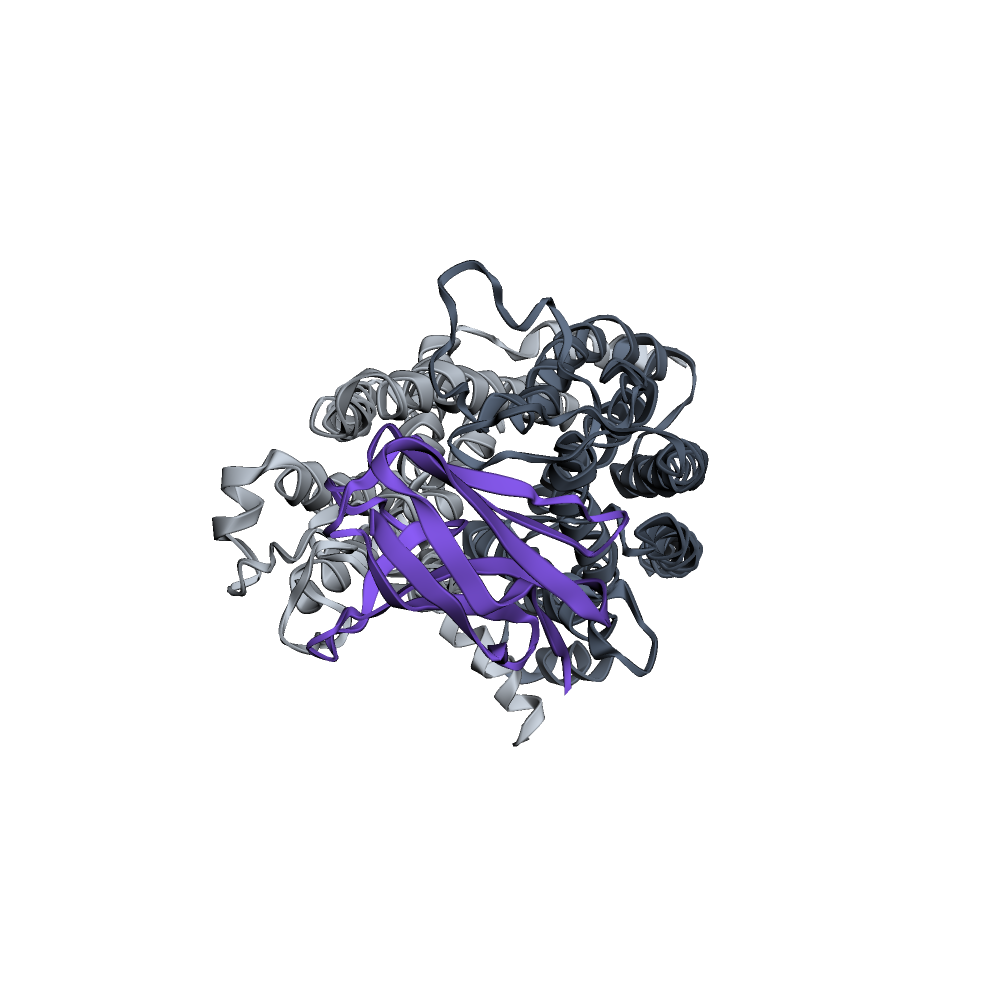
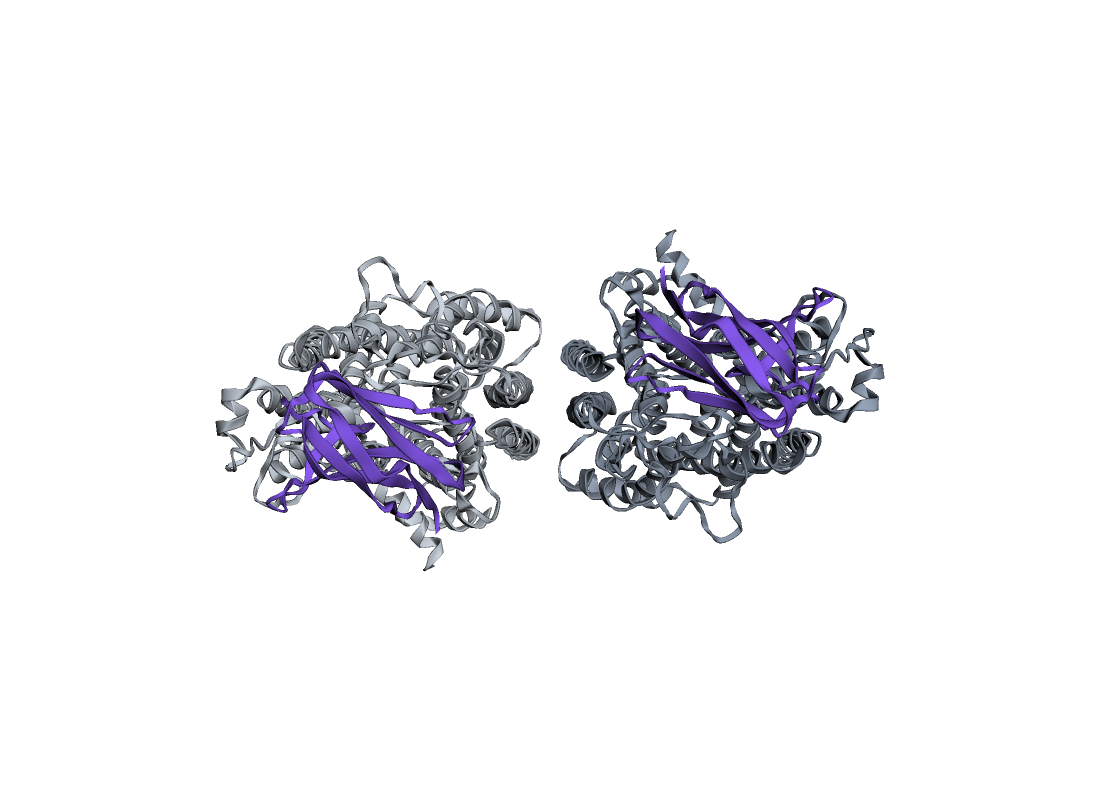
The models below are the best-scoring candidates from recent campaigns, each shown on the full receptor/transporter: click a card to load the interactive 3D model. The designed binder is in colour; the target is in grey; for the transporters, the N-terminal bundle (light) and C-terminal bundle (dark) are shaded separately. These are predicted designs (no experimental validation yet); reported affinities are computational proxies.
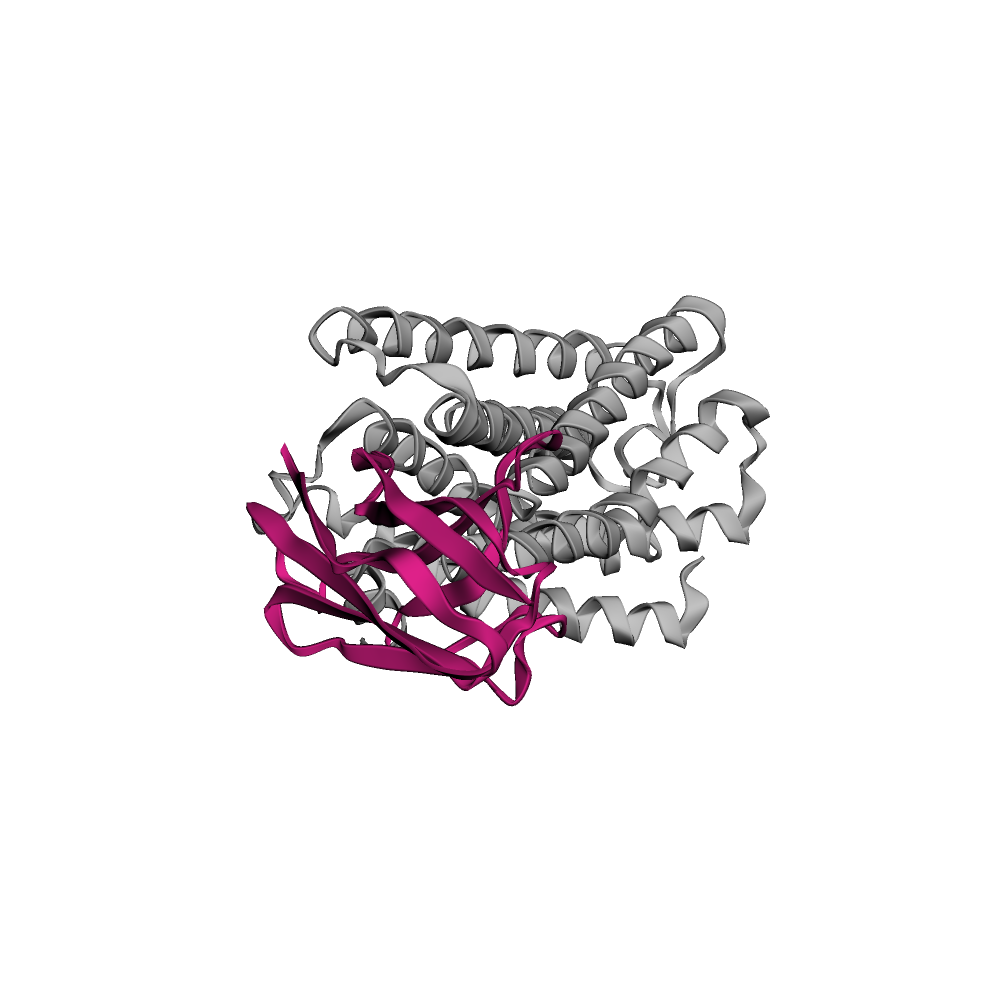
tOZRH at the intracellular (G-protein-coupling) face, on the full receptor (cofold). Design ipTM 0.92.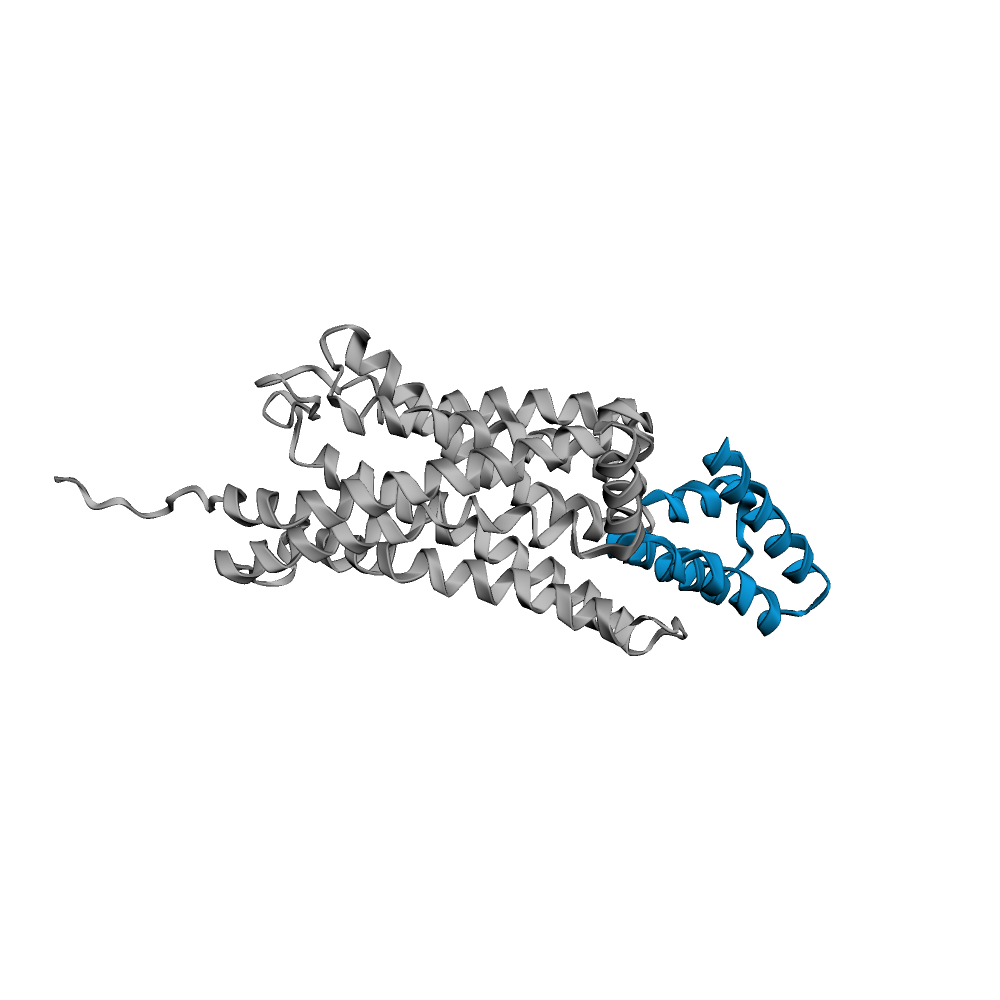
Yq1Cxu with a novel de novo fold (~64% novel) at the intracellular Nb7 (G-protein-coupling) face, on the full receptor. Co-fold ipTM 0.96, ~1100 Ų buried, ΔG −9.9 kcal/mol (~57 nM). An intracellular conformational stabilizer, not an extracellular ligand.