Katharina L. Dürr
Enabling mechanism-driven therapeutic discovery for challenging membrane protein targets
Membrane proteins drive cellular signalling, ion gradients and the transport of metabolites and nutrients; their dysregulation causes disease, and more than 50% of approved drugs act on them — yet many remain undrugged. We work out how they function and build the tools needed to target them, combining structural biology with mass spectrometry and generating high-quality protein binders by machine learning and classical design. We work with academic and industry partners worldwide.
Director of Translational Research, Kavli Institute for Nanoscience Discovery — Department of Chemistry, University of Oxford
Research highlights
-
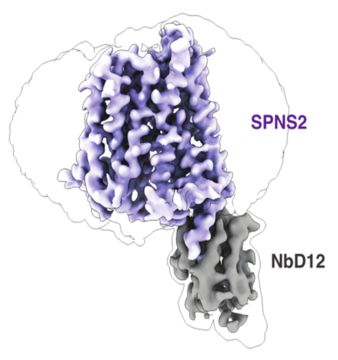 Transport, inhibition and PI(4,5)P₂ regulation of the S1P exporter SPNS2 — Cryo-EM structures and biochemistry of the human sphingosine-1-phosphate (S1P) exporter SPNS2, captured in complex with a nanobody (NbD12), together with mechanistic work showing how SPNS2 recruits PI(4,5)P₂ to synergistically regulate S1P transport.
-
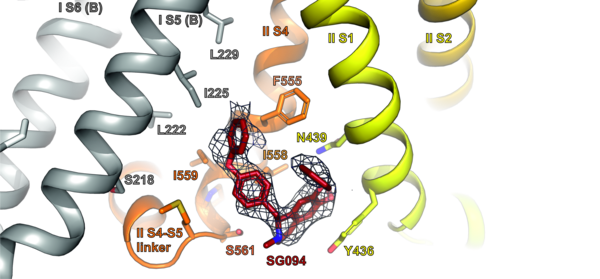 Structural basis of TPC2 inhibition by SG-094 — Asymmetric antagonist binding to the lysosomal two-pore channel; highlighted in a Structure Preview (Descending to inhibit).
-
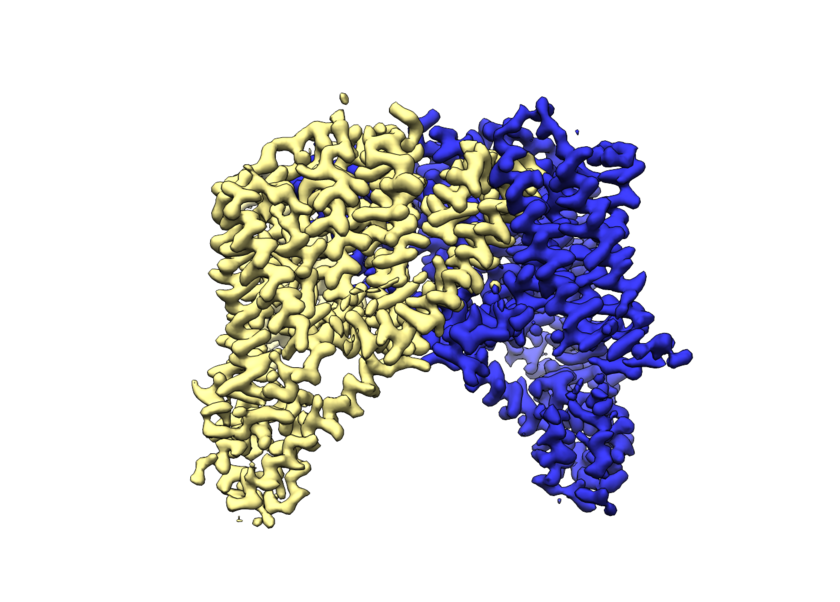
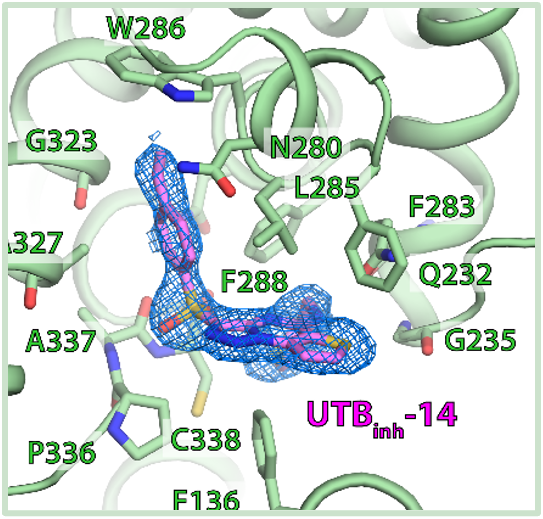 Human urea transporters UT-A and UT-B and their inhibition — Cryo-EM structures of the human urea transporters with inhibitor bound in the central pore, providing a starting point for selective UT-B inhibitor design.
- Cryo-EM structures of the epilepsy-linked Kv3.1 channel — Resolved gating control by the cytoplasmic T1 domain, with implications for KCNC1 encephalopathies.
-
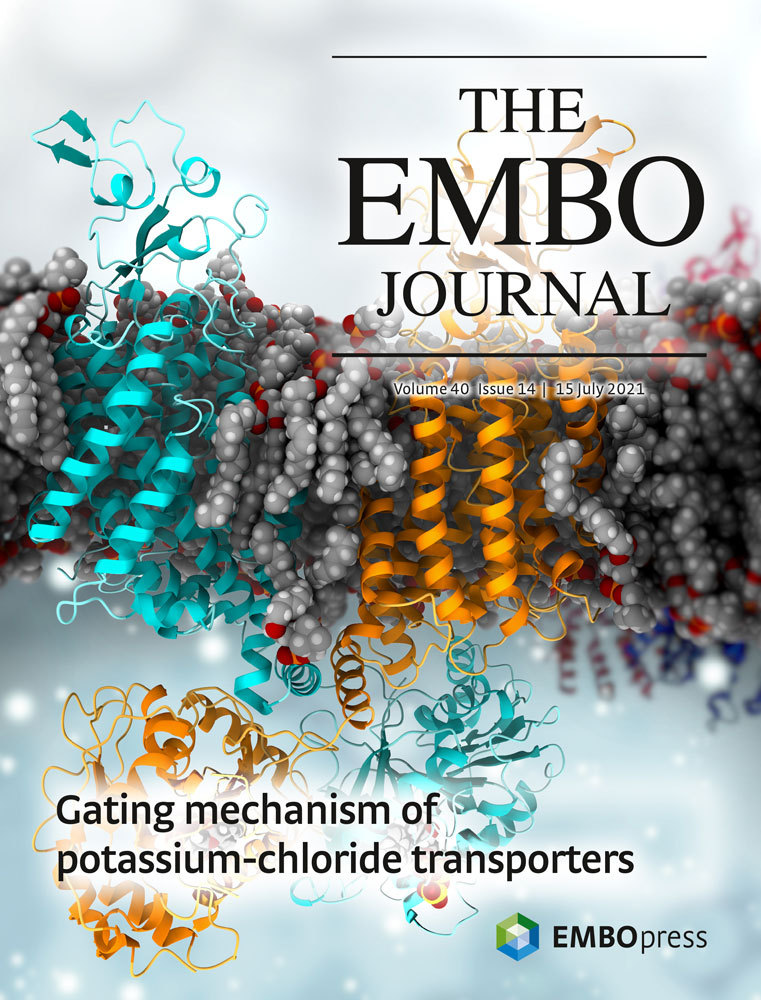
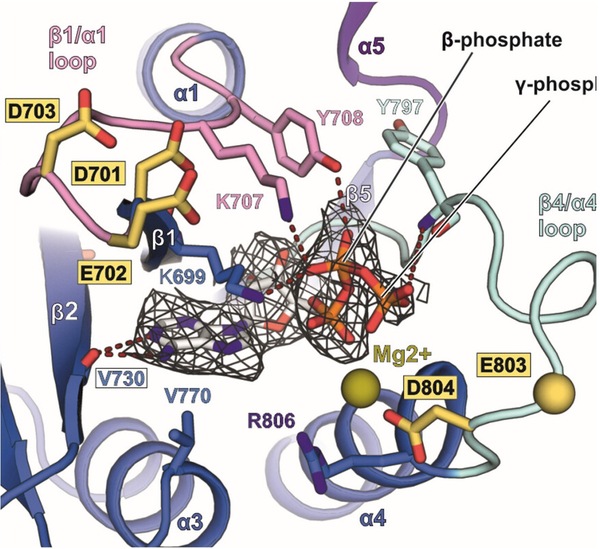 Cover story in The EMBO Journal: KCC1 and KCC3 — Cryo-EM structures of human KCC1 and KCC3 revealed N-terminal autoinhibition and a nucleotide-binding pocket regulating K-Cl transport; covered by Flygaard et al. in a News & Views (Transport unplugged).
-
 RESOLUTE consortium: SLC transporters for drug discovery — Contributed to a public-private effort to unlock an under-studied class of drug targets.
- AMPA-subtype glutamate receptor GluA2: gating states and activation by a cone-snail toxin — Captured the full-length GluA2 receptor in resting, pre-open and desensitized states (Cell), and resolved X-ray complexes with cone-snail toxins that illuminate the activation mechanism (Science).
- More than 50 PDB depositions across 10 membrane protein families — Including KCC1/3, KCC2, Kv3.1, TPC2, SLC15A4, urea transporters UT-A/UT-B, SPNS2 and GluA2. Browse all structures
- 1,400+ citations · h-index 18 · i10-index 26 — Across structural and functional studies of membrane transport proteins.
Latest updates
- November 2026 New preprint with Edina Rosta (UCL): Structural relationships between the SLC12 cotransporter C-terminal domain, universal stress proteins and adenylating enzymes (bioRxiv). Read it.
- October 2026 New paper with Boehringer Ingelheim: Molecular insights into GPR55 modulation reveal an atypical activation mechanism and glycosylation-dependent efficacy regulation, Nature Communications. Read it.
- October 2026 Accepted: Amphipathic helices enable fatty acid uptake and activation by human FATP2 at ER contact sites, Nature Structural & Molecular Biology.